
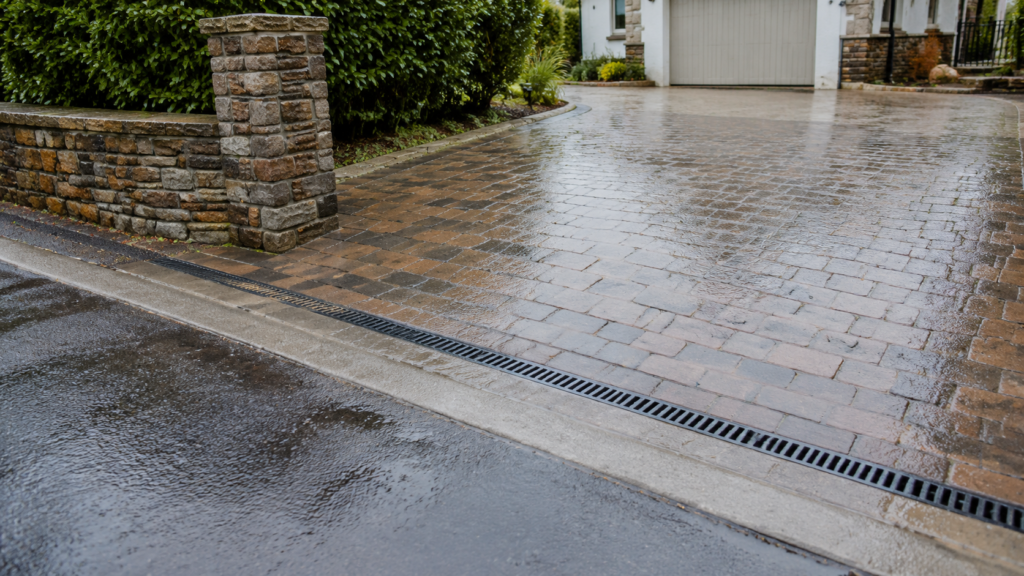
Water pooling on a driveway usually points to a problem with levels, drainage or the surface itself. A small puddle may seem harmless. However, repeated standing water can stain paving, encourage algae and weaken the construction below. South Devon’s periods of heavy rain often reveal faults that remained hidden during dry weather.
Common causes of water pooling on a driveway
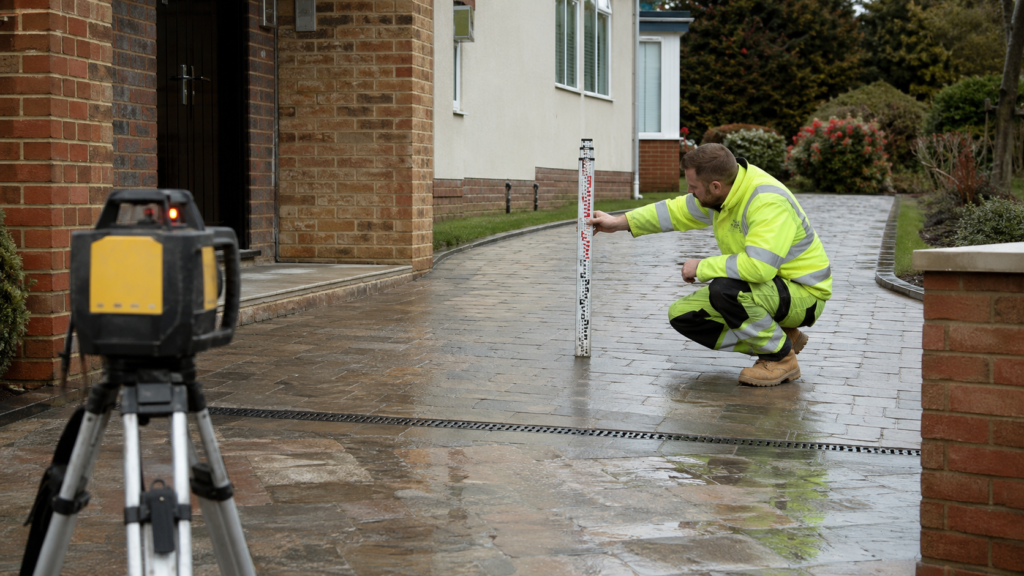
Poor falls create one of the most frequent problems. A driveway needs carefully planned gradients that move water towards a suitable drainage point. Low spots can develop when the ground settles or when the original installation lacks accurate level control.
Blocked channels can also hold water across the surface. Leaves, soil, silt and weeds restrict the route into a channel or gully. Therefore, regular cleaning can solve some minor problems before they become expensive.
Other common causes include:
- Sunken paving over a weak or poorly compacted sub-base.
- Damaged or collapsed drainage pipes below the driveway.
- Jointing material that has clogged a permeable paved surface.
- Tarmac depressions caused by settlement or repeated loading.
- Water flowing onto the driveway from roofs, lawns or neighbouring ground.
Why standing water should not be ignored
Standing water creates both practical and structural risks. During colder conditions, trapped water may freeze and expand. As a result, small cracks and loose edges can worsen over time. Wet surfaces may also become slippery when algae or moss develops.
Water can enter open joints and reach the supporting layers below. If those layers lose stability, blocks may move, spread or sink. Meanwhile, uncontrolled runoff can affect walls, thresholds, planting areas or adjoining land.
How to fix water pooling on a driveway
The right repair depends on the cause, available space, soil conditions and existing construction. A contractor should inspect the entire water route before recommending work. Simply adding a channel may move the problem elsewhere.
Possible solutions include:
- Regrading a local area to remove a low point.
- Rebuilding failed foundations beneath sunken paving.
- Cleaning, repairing or replacing drainage channels.
- Directing runoff towards a suitable permeable border.
- Installing a correctly designed soakaway where ground conditions allow.
- Reconstructing the driveway with a permeable paving system.
Government guidance supports permeable surfacing or drainage towards a lawn or border for many front-garden driveways. Nevertheless, every property needs a site-specific assessment. Clay soil, steep gradients and nearby foundations can limit certain options.
Arrange a driveway drainage assessment
Vectorscape can assess surface levels, construction, access and drainage around your South Devon property. The team can then explain practical repair or replacement options. A well-planned solution should remove water safely while protecting the driveway and surrounding property.