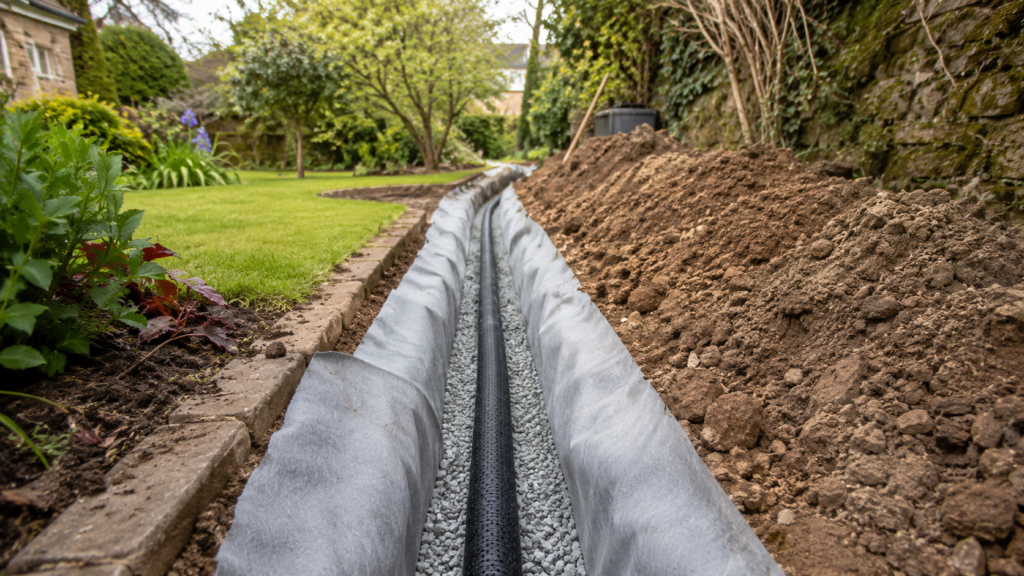
Choosing a French drain or soakaway starts with one question. Where does the water come from? A channel drain performs another task, although contractors often combine all three within one drainage design.
A proper site survey should review slopes, soil, buildings and existing drainage. It should also identify where the collected water can discharge safely. Therefore, the visible drain represents only one part of a complete solution.
What is a French drain?
A French drain usually contains a perforated pipe surrounded by clean drainage stone. A permeable membrane helps separate the stone from nearby soil. Water enters along the trench and moves through the pipe or aggregate towards a suitable outlet.
This approach can intercept water moving through sloping ground. It may also relieve persistently wet garden areas or protect new landscaping. However, fine soil and silt can reduce performance when the system lacks suitable separation and maintenance access.
What is a channel drain?
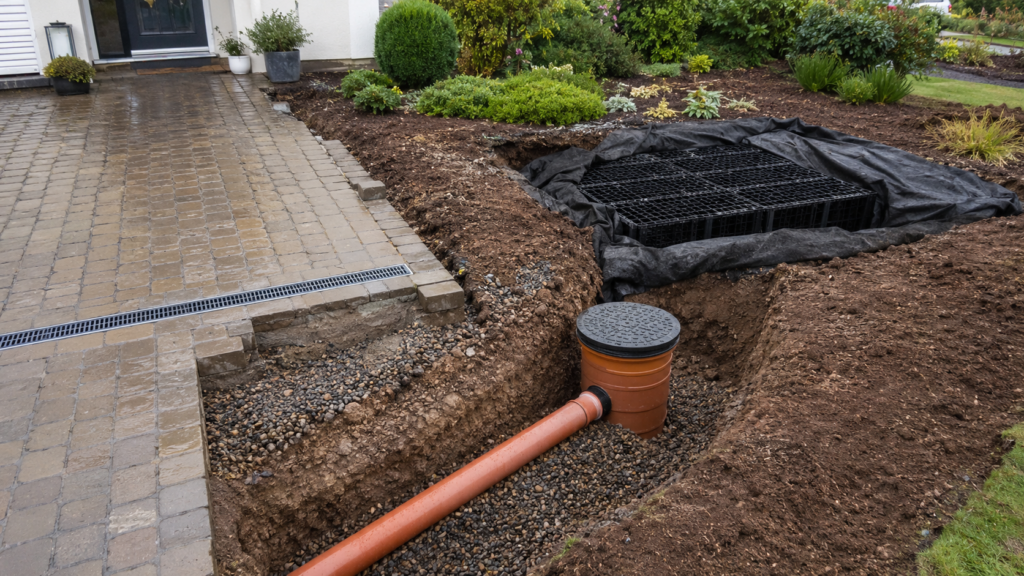
A channel drain collects water directly from a hard surface. You often see narrow grated channels across garage entrances, driveway thresholds or patio edges. Accurate falls direct runoff towards the channel before it reaches a building or public footway.
Channel drains suit concentrated surface flow. Nevertheless, the channel still needs a lawful and suitable discharge route. Regular removal of leaves, grit and debris also keeps the outlet clear.
What is a soakaway?
A soakaway stores collected rainwater below ground and allows it to enter suitable surrounding soil. Modern systems may use purpose-made crates with inspection and maintenance arrangements. The design must reflect the drained area, expected rainfall and tested infiltration rate.
Soakaways do not suit every property. Clay ground may release water too slowly, while a position near foundations may create risk. Underground services, contamination and high groundwater can also restrict the available location.
French drain or soakaway: how do you choose?
- Consider the following points before selecting any drainage system:
- Identify whether the problem involves surface runoff or water within the ground.
- Check gradients and locate every low point.
- Confirm soil conditions through appropriate investigation.
- Trace existing drains, utilities and roof-water connections.
- Protect buildings, boundaries and neighbouring property.
- Plan access for cleaning, inspection and future repairs.
A French drain may intercept groundwater, while a channel captures surface flow. A soakaway can then receive water where soil conditions permit. Consequently, a combined design often performs better than one isolated component.
Get practical drainage advice in South Devon
Vectorscape can inspect the site and explain which combination fits the property. Careful design helps control rainwater without creating a new problem elsewhere. Always confirm permissions and drainage connections before installation begins.