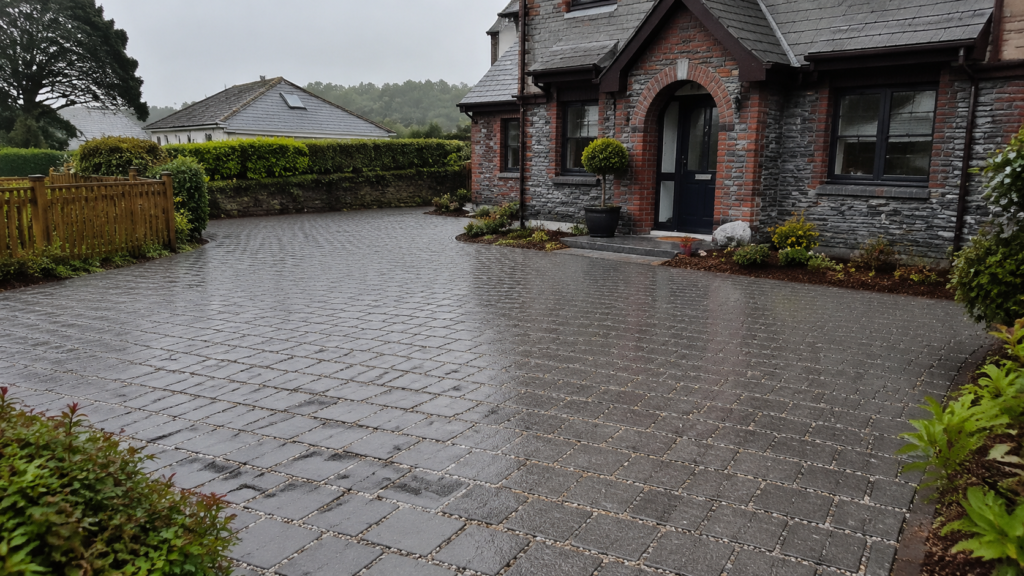
A permeable paving driveway allows rainwater to pass through designed joints into an open-graded construction below. The system can store and manage runoff close to where rain falls. Therefore, it may reduce pressure on conventional drainage during heavy showers.
Permeable paving looks similar to standard block paving, yet the construction differs below the surface. Correct specification matters at every layer. Ordinary blocks laid over a conventional dense sub-base do not automatically create a permeable driveway.
When a permeable paving driveway offers clear benefits
This system often suits front gardens where the owner wants a durable paved finish and better rainwater control. It can work particularly well on level or gently sloping sites with enough depth for the specified sub-base.
Government guidance says permeable driveway materials may avoid a planning application for front-garden paving in many situations. Alternatively, an impermeable surface can direct water into a lawn or border. Local restrictions can still apply, so homeowners should check before starting work.
Permeable paving may be helpful when you want to:
- Reduce rapid runoff from a large hard surface.
- Avoid water flowing onto the pavement or road.
- Combine practical parking with an attractive block finish.
- Store rainfall temporarily within the driveway construction.
- Support a wider sustainable drainage strategy.
When another approach may work better
Steep gradients can make permeable construction more complicated. Water may move through the sub-base instead of remaining evenly distributed. Clay soil can also limit natural infiltration, although a lined or controlled-outflow system may remain possible.
The contractor must consider building foundations, retaining structures and underground services. Runoff from adjoining roofs or gardens may also introduce more water and silt than the system should receive.
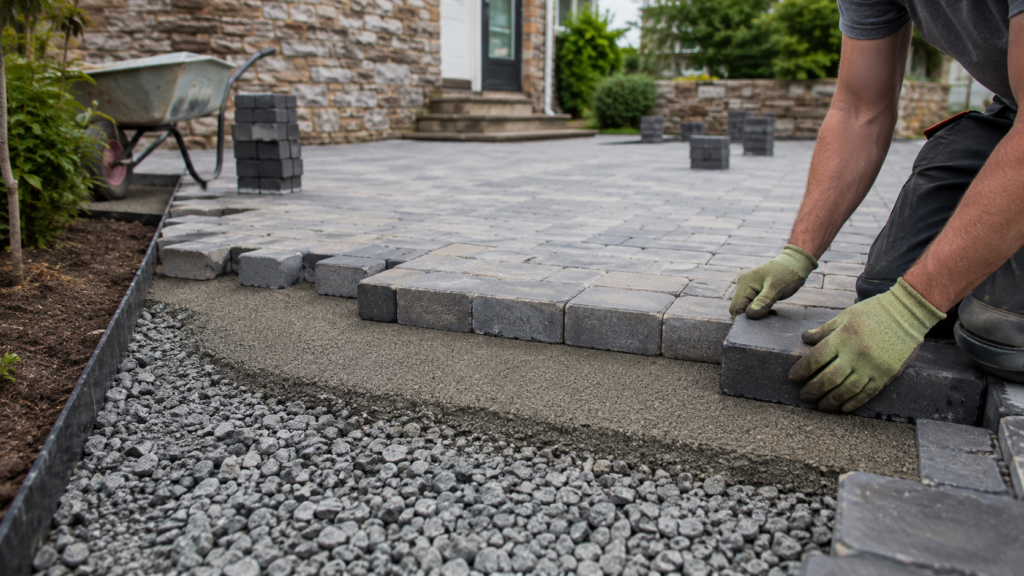
What makes permeable paving perform properly?
Good performance depends on the full build-up rather than the blocks alone. The design normally needs suitable excavation, separation layers and clean open-graded aggregate. It also needs correct edge restraints and permeable jointing material.
Owners should keep soil, sand and fine debris away from the surface. Regular sweeping reduces the risk of blocked joints. Promptly removing leaves and mud also supports long-term infiltration.
Before installation, ask the contractor about:
- The planned water route and overflow strategy.
- Ground conditions and any infiltration testing.
- Sub-base depth and aggregate specification.
- Edge details beside walls and planting.
- Maintenance requirements after completion.
Discuss a permeable driveway with Vectorscape
Vectorscape can review your South Devon driveway, drainage needs and preferred appearance. The team can compare permeable paving with gravel, tarmac and conventional block paving. That balanced advice helps you choose a surface that suits both the property and local conditions.