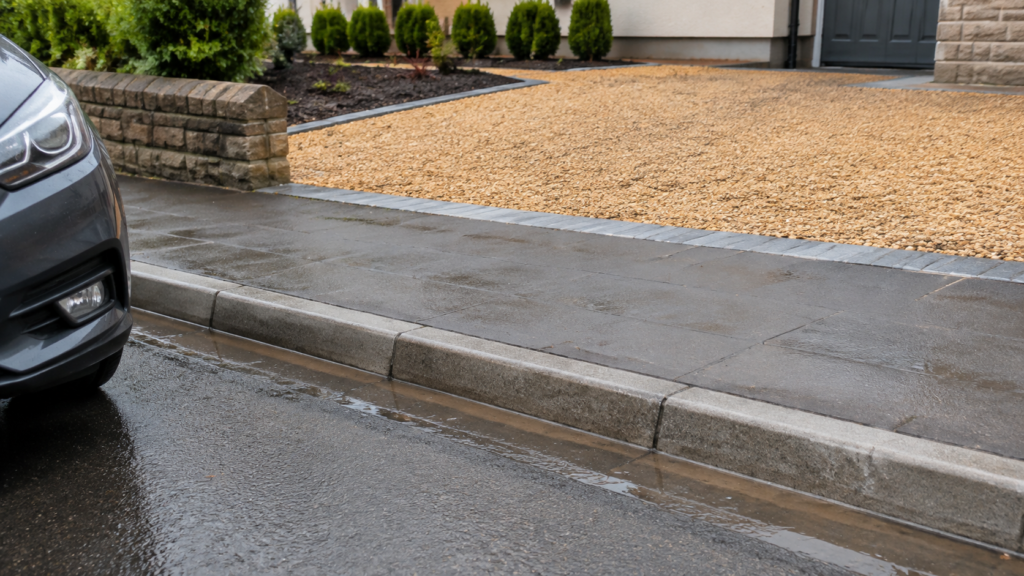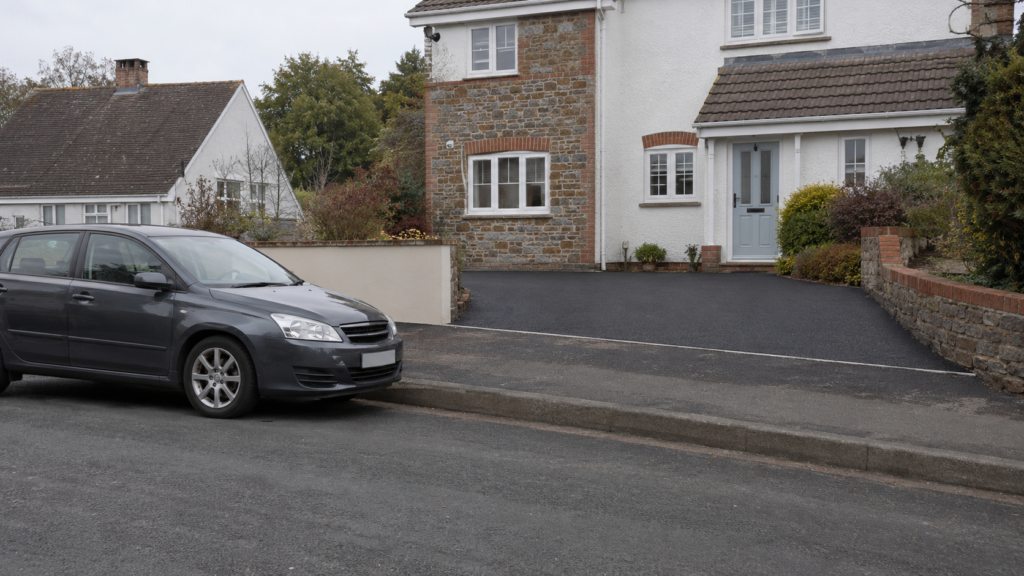
A driveway without a dropped kerb does not automatically gain vehicle access across the pavement. The driveway and approved crossing serve different purposes. The private surface provides parking, while the crossing protects the public highway route.
The Planning Portal states that drivers need a dropped kerb to cross a pavement onto their property. You must apply to the relevant local authority before creating one. Therefore, building the parking area first does not remove the need for approval.
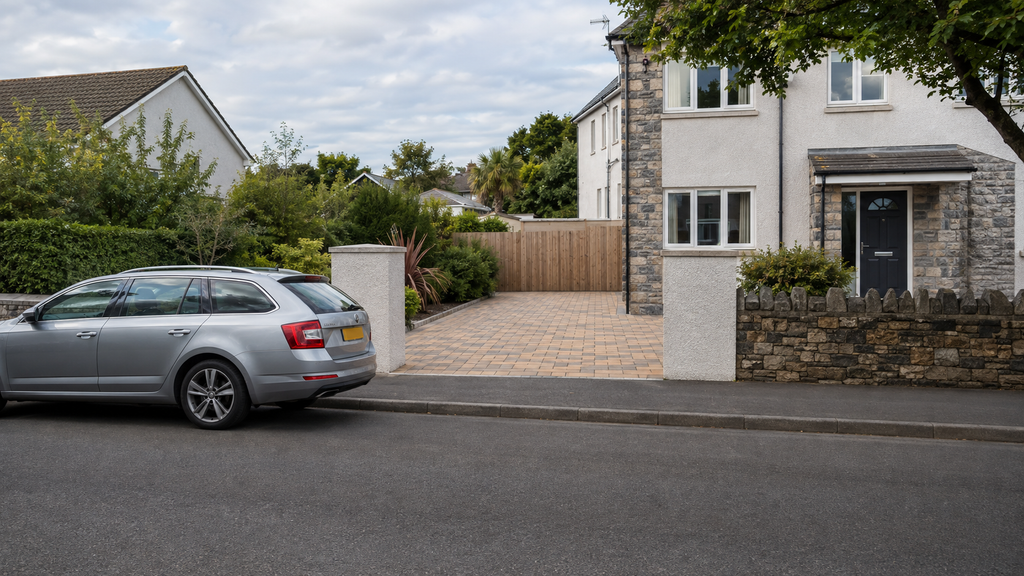
Why a driveway without a dropped kerb creates problems
A normal kerb and footway were not designed as a regular vehicle entrance. Repeated crossing can damage kerbs, paving and buried services. A vehicle may also obstruct pedestrians while mounting a high edge.
The activity can create additional risks for wheelchair users, people with pushchairs and anyone with limited vision. Furthermore, the council may refuse a later crossing application if the proposed site fails its safety checks.
Could the council refuse the crossing?
Yes. The highways authority considers the street and property before issuing a licence. Reasons for concern may include poor visibility, limited parking depth or a position near a junction. Trees, lighting columns, utility equipment and parking controls can also affect the decision.