
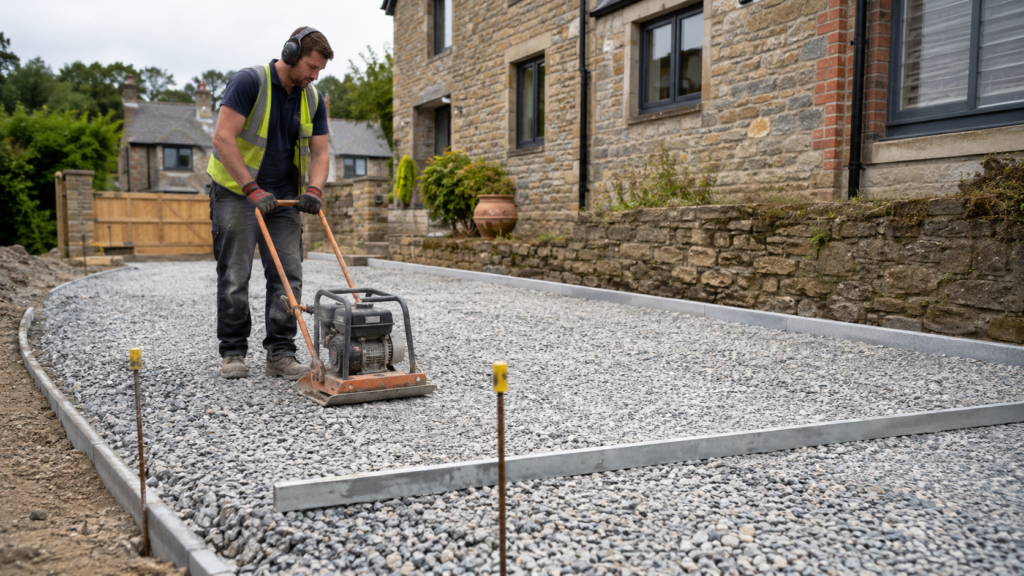
Driveway gravel colours and sizes influence both kerb appeal and everyday performance. The right stone should complement the building, remain comfortable to use and resist excessive movement. Devon properties range from coastal homes to rural cottages, so one finish cannot suit every setting.
Always view real samples outdoors. Wet stone often looks darker, while strong sunlight can reveal colours that indoor lighting hides. A larger sample area gives a more honest impression than one handful.
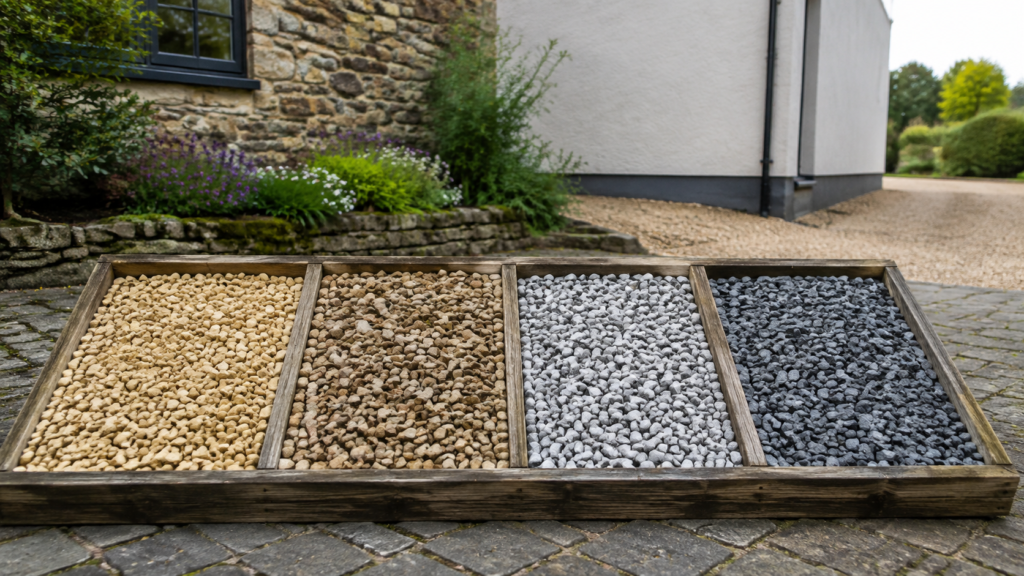
Match gravel colour to the property
Warm buff, honey and brown tones can complement brick, natural stone and traditional render. Grey, charcoal and silver mixes often suit contemporary homes or darker roofs. Cream stone creates a bright entrance, although it may show mud and leaf staining more clearly.
Mixed gravels can connect several building colours without matching one element too closely. Consider the following features together:
- Wall material and render colour.
- Roof tiles, slate and rainwater goods.
- Existing paving, kerbs and garden walls.
- The wider street or rural landscape.
- Planting colours across different seasons.
Contrast can define the driveway, while a related tone creates a calmer transition. Neither approach is automatically better.
Choose a size that supports vehicle use
Very small gravel can lodge within tyre treads and move beyond the driveway. Large stones may feel difficult for walking, wheelchairs or pushchairs. Many domestic driveways use a medium-sized angular gravel because it balances appearance and stability.
Therefore, angular particles lock together more effectively than rounded shingle. However, the supporting base still carries the vehicles. Decorative gravel cannot compensate for shallow or poorly compacted construction.
Consider access and maintenance
High-contrast pale gravel may need more frequent cleaning near trees or muddy verges. Dark stone can become warmer in full sun and may show pale dust. Coastal exposure, falling leaves and surrounding soil will all change how the surface weathers.
For easier pedestrian movement, consider a paved route beside the gravel. A stabilised section may also help around doors, bins or regular walking lines. Strong edging prevents stone from mixing with planted borders.
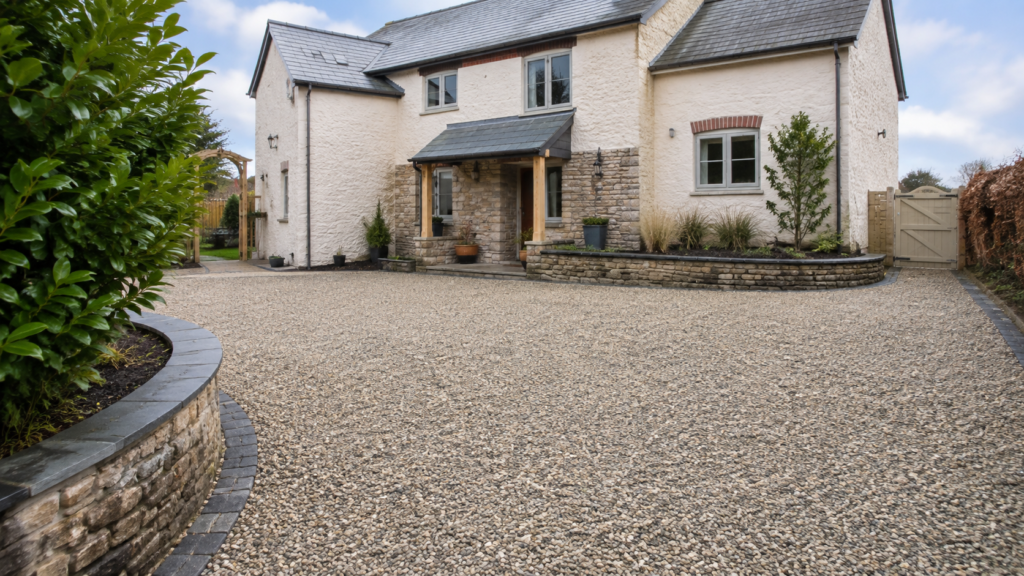
How to choose driveway gravel colours and sizes
Ask to see the preferred gravel beside the proposed blocks or kerbs. Then check the combination in dry and wet conditions. This simple step can prevent a costly colour mismatch.
Vectorscape can recommend gravel, edging and entrance details for South Devon homes. The final choice should balance visual character, access, vehicle movement and realistic maintenance.