

You can make a sloping garden more usable by organising the levels around real activities. Terraces, paths, steps and retaining walls can turn difficult ground into connected outdoor spaces. However, the design must manage soil, water and safe movement together.
Start by deciding what the garden needs to support. A dining terrace requires different space from a play lawn or productive planting area. Clear priorities prevent expensive construction that adds little practical value.
Ways to make a sloping garden more usable
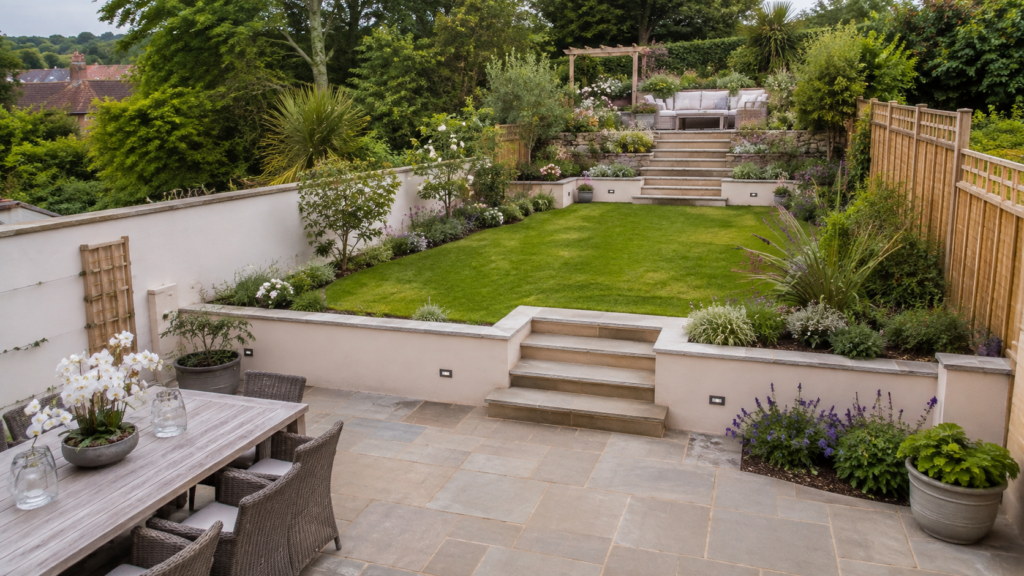
Terracing can create flatter areas at different heights. One level might connect with the home, while another supports planting or seating. The transitions between these zones then become part of the overall design.
Avoid creating too many small platforms. Each retaining wall, step and edge adds construction and maintenance. A few generous spaces often work better than numerous narrow tiers.
Possible zones include:
- A patio near the kitchen or living room.
- A level lawn for play or relaxation.
- Raised beds within sunny upper ground.
- A sheltered seating area with a view.
- Practical storage beside a secondary route.
Plan comfortable routes through the garden
Meanwhile, direct steps provide an efficient link across a steep change. Wider treads and landings can make the route feel calmer. Handrails may add confidence where the setting and design require them.
A gently graded path can support easier access when enough space exists. Curves and switchbacks increase the route length while reducing the gradient. Professional input becomes important when the path must meet defined accessibility requirements.
Use retaining walls carefully
Retaining walls hold back soil and create the new levels. Their design depends on height, loads, ground and nearby structures. Higher or complex walls may need structural design and specific approvals.
Drainage behind the wall matters because trapped water increases pressure. The construction may use suitable backfill, filters and outlets. Surface falls should also direct water away from vulnerable edges.
Treat drainage as part of the landscape
Rain naturally travels downhill, so regrading can change its route. The finished design must not send runoff towards the house or neighbouring land. Channels, permeable surfaces, planted areas and land drains may work together.
Planting can soften retaining walls and stabilise suitable areas. Nevertheless, roots cannot replace correctly engineered support. Select plants for the aspect, soil and long-term maintenance.
Create a coordinated sloping-garden plan
Vectorscape can review access, levels, drainage and intended use across South Devon gardens. The team can then coordinate excavation, retaining work, paving and planting areas. A joined-up design turns the slope into an asset rather than a daily obstacle.