
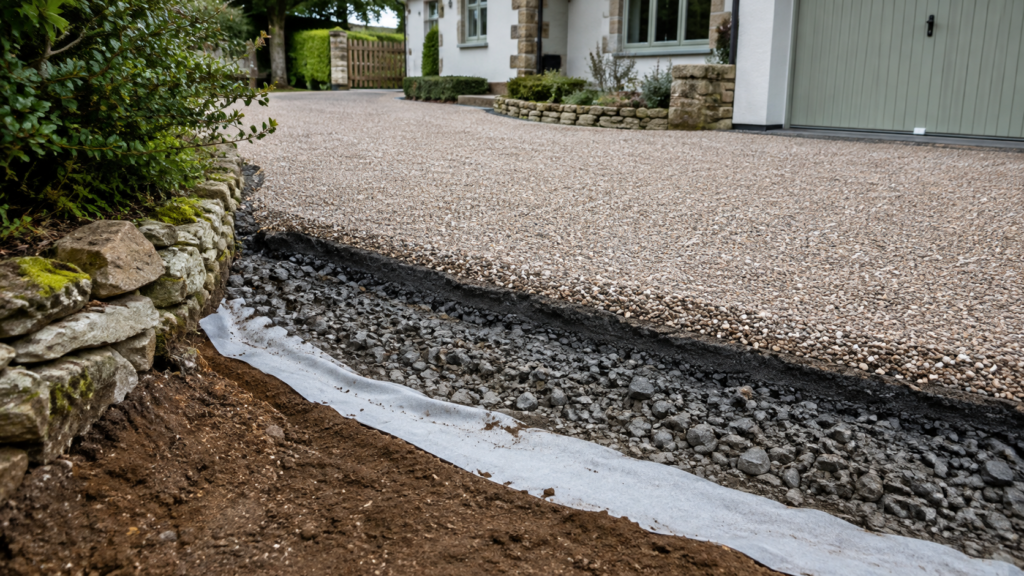
Gravel driveway sub-base depth determines how well the surface carries vehicles and resists movement. Decorative stone only forms the visible finish. The compacted construction underneath provides most of the strength.
Many domestic driveway specifications start around 150mm of compacted sub-base. However, that figure does not suit every property. Soft ground, heavy vehicles or poor drainage may require deeper construction or additional stabilisation.
What affects gravel driveway sub-base depth?
A contractor should inspect the soil and existing surface before selecting a depth. Firm, free-draining ground behaves differently from wet clay or made-up land. Previous excavation and utility trenches can also create weak local areas.
The specification should consider:
- Expected vehicle size and daily traffic.
- Ground strength and signs of movement.
- Driveway gradient and turning areas.
- Drainage and groundwater conditions.
- Existing concrete, tarmac or loose fill.
- Required finished levels beside buildings.
Simply adding gravel over soil rarely produces a lasting driveway. Wheels push the stone into the ground, while weeds and mud rise through the surface.
How should the sub-base be installed?
The team excavates to the planned formation level and removes unsuitable material. A suitable geotextile membrane may separate the ground from the aggregate. It helps prevent different layers from mixing, but it cannot replace a strong sub-base.
Contractors install aggregate in controlled layers. They compact each layer before adding the next. This method creates more consistent support than tipping the full depth and compacting only the top.
Accurate falls should direct water towards a planned drainage area. Low spots can hold water within the construction and reduce stability. Strong edging also contains the sub-base and decorative gravel.
How deep should the surface gravel be?
Meanwhile, the loose decorative layer should cover the base without becoming excessively deep. Around 40mm to 50mm often provides a useful starting point for many angular driveway gravels. Stone that sits too deep can feel difficult under tyres and feet.
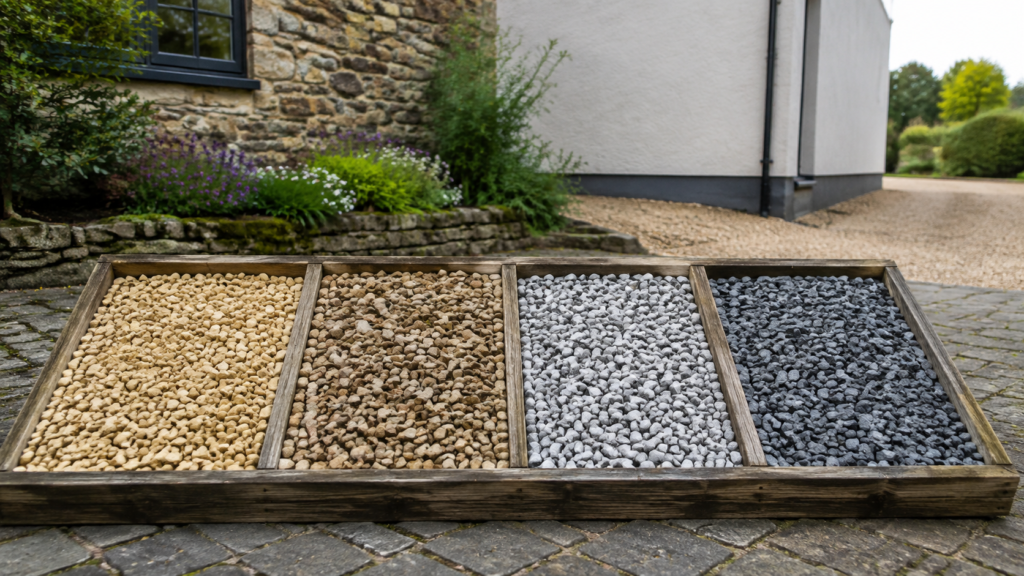
Stone size and shape affect the result. Angular gravel locks together better than smooth rounded pebbles. A contractor may also use stabilisation grids where the design needs firmer pedestrian access or better containment.
Ask for a complete construction specification
A clear quotation should describe excavation, membrane, sub-base material, compacted depth, edging and surface gravel. It should also explain drainage and waste removal. This information makes quotations easier to compare.
Vectorscape can assess your South Devon site and design a gravel driveway around real ground conditions. Reliable preparation helps the finished surface remain attractive, stable and easier to maintain.