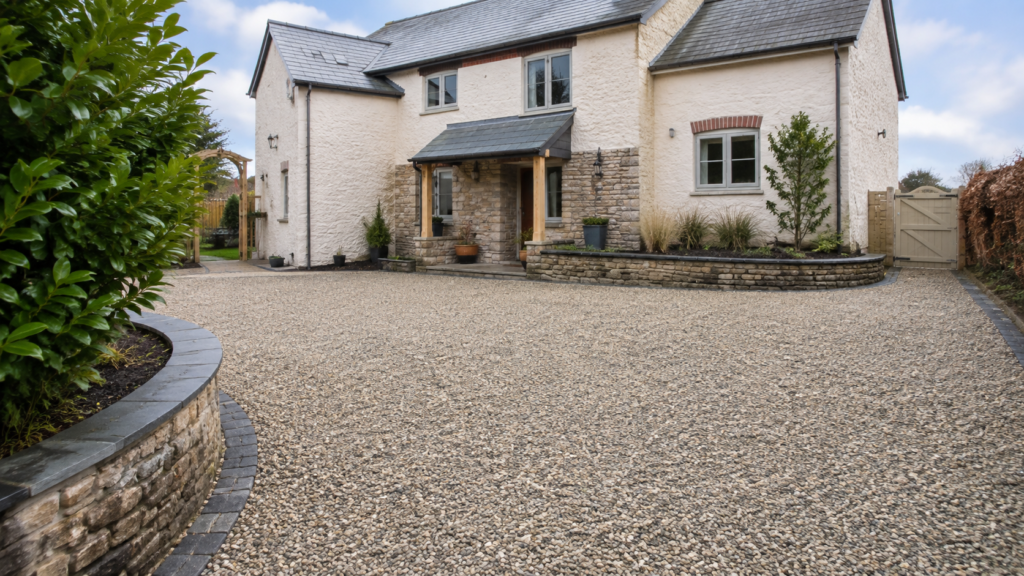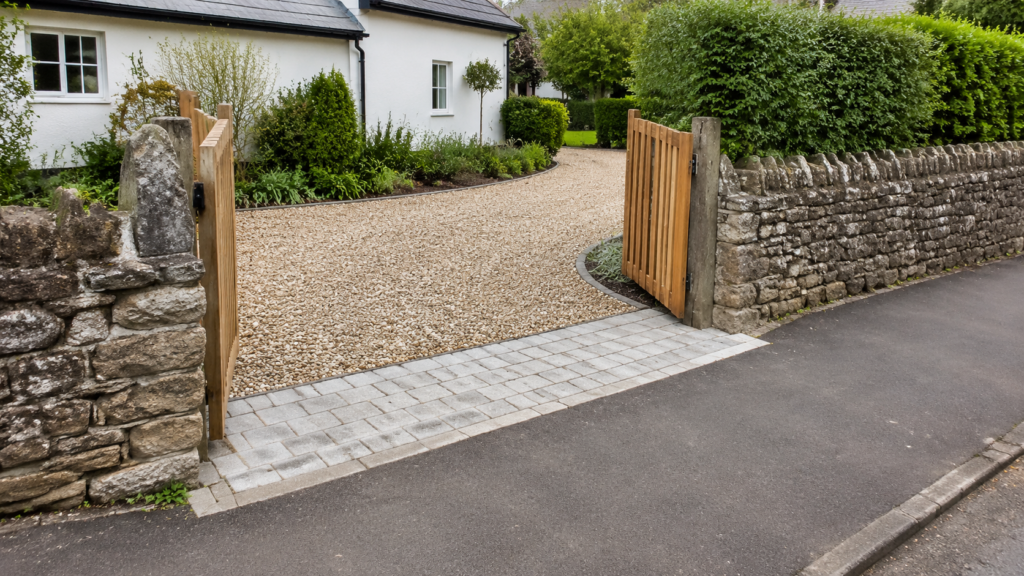
Good design can stop gravel moving onto the pavement when vehicles brake, turn or accelerate. A steep gradient makes movement worse. Without control, stones may scatter across the pavement and create an untidy or uncomfortable route.
The best solution starts during design. Strong containment, suitable gravel and a stable entrance work together. Regular maintenance then keeps small amounts of movement from becoming a persistent problem.
Choose angular gravel in a practical size
Rounded stones roll easily under tyres and feet. Angular driveway gravel interlocks more effectively, which reduces movement across the surface. Very small material may travel in tyre treads, while oversized stone can feel unstable.
A contractor should match the stone to the gradient, traffic and desired appearance. The decorative depth also matters. Excessively deep gravel allows wheels to push larger waves of material towards the entrance.
Install secure edging around the driveway
Concrete kerbs, block paving or other fixed restraints contain the sides of a gravel driveway. The edging needs proper bedding and support. Lightweight garden strips rarely withstand repeated vehicle loading.
Pay particular attention to curved borders and turning points. Tyres apply sideways pressure in these areas. A defined border also separates gravel from lawns, planting and drainage features.
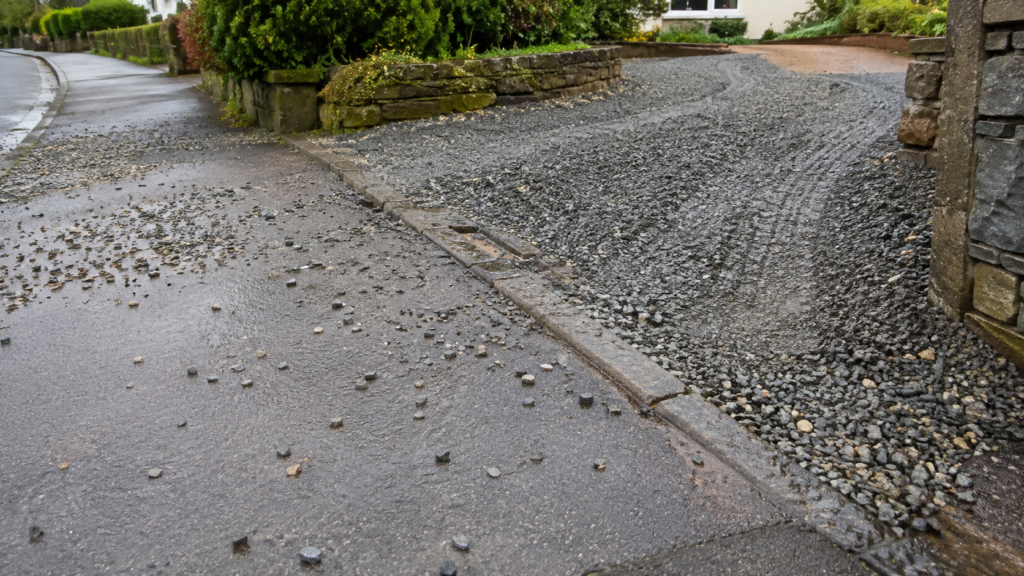
How to stop gravel moving onto the pavement
A short paved or tarmac apron can capture much of the movement before gravel reaches the pavement. Stabilisation grids may also hold the final section more firmly. The exact detail should connect safely with any approved vehicle crossing.
Useful entrance measures include:
- A securely restrained paved threshold.
- Gravel grids filled to the correct level.
- A reduced loose-stone depth near the pavement.
- Suitable falls that avoid washing gravel downhill.
- Regular sweeping of the highway edge.
Never allow a containment feature to create a trip point across a pedestrian route. It should also avoid blocking the intended drainage path.
Repair ruts before they push more stone
Ruts concentrate vehicle movement and trap loose gravel. Simply raking them flat may provide only a temporary improvement. The underlying base could need local reconstruction and compaction.
Encourage vehicles to turn gently and avoid harsh acceleration on loose surfaces. Occasional raking can redistribute stone, while periodic topping-up replaces lost material. Remove mud and organic debris before it mixes into the gravel.
Improve an existing gravel driveway
Vectorscape can assess the gradient, entrance, edging and underlying base. The team can then recommend targeted improvements or a complete rebuild. Good design keeps gravel within the property while preserving its natural appearance and free-draining character.