
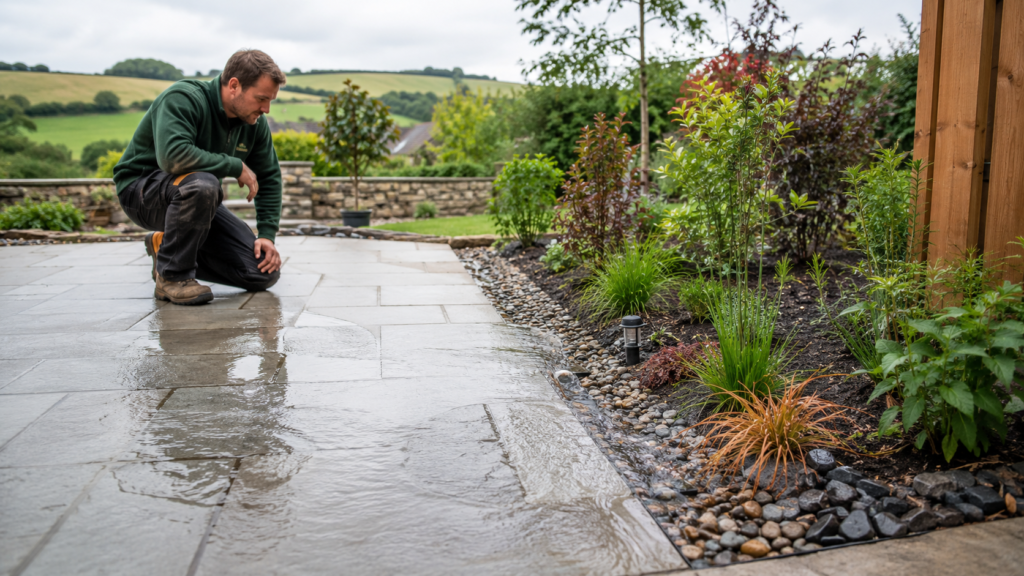
Good patio drainage moves rainwater away from vulnerable walls and thresholds without affecting neighbouring land. The design should start before excavation. Surface levels, soil, existing drains and surrounding slopes all influence the safest route.
A contractor should never rely on guesswork. Even a small paving area can collect a surprising volume during heavy rain. South Devon’s changeable weather makes accurate falls and dependable outlets especially important.
Use controlled falls across the paving
A patio should normally have a gentle, consistent gradient towards its drainage destination. The fall needs enough movement to avoid puddles without making furniture feel unstable. Complex shapes may need several carefully joined planes.
The installer must check finished levels beside doors and damp-proof courses. Raising paving too high can increase moisture risk or interfere with accessible thresholds. Existing garden slopes may also send additional water towards the patio.
Choose a suitable patio drainage destination
Some patios can drain towards a lawn, planting bed or other permeable area. This approach keeps water within the property and may support natural infiltration. However, already saturated ground can push water back towards the paving.
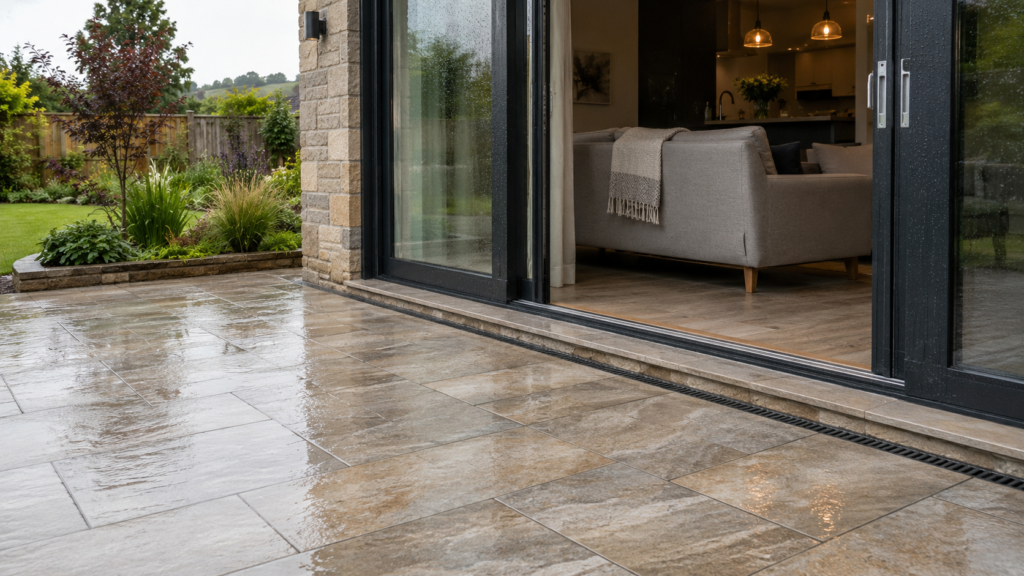
Channel drains may protect doorways, retaining walls or enclosed edges. They collect surface runoff along a defined line. The channel still needs a suitable outlet and accessible points for cleaning.
Possible drainage components include:
- Linear channels beside thresholds.
- Falls towards a lawn or planted border.
- Gravel margins that intercept minor runoff.
- French drains beside retaining structures.
- A designed soakaway where ground conditions permit.
- Controlled connections approved for surface water.
Never direct patio water into a foul drain or onto neighbouring property. Confirm existing drainage routes before making any connection.
Prevent common patio drainage failures
Low spots often develop through inaccurate bedding or later ground movement. Blocked channels then make the problem worse. Leaves, jointing debris and soil should be removed before they restrict flow.
Water can also arrive from roofs, downpipes and upper garden levels. Therefore, the design should assess the whole catchment rather than the patio alone. A retaining wall may need separate drainage behind it.
Inspect drainage before handover
The contractor should check surface levels throughout installation. A controlled water test can reveal slow areas before the project ends. The customer should also receive clear guidance for cleaning channels and protecting outlets.
Vectorscape can plan patio drainage alongside excavation, paving and landscaping. Coordinating these elements creates a more comfortable outdoor space and protects the surrounding property during wet weather.