
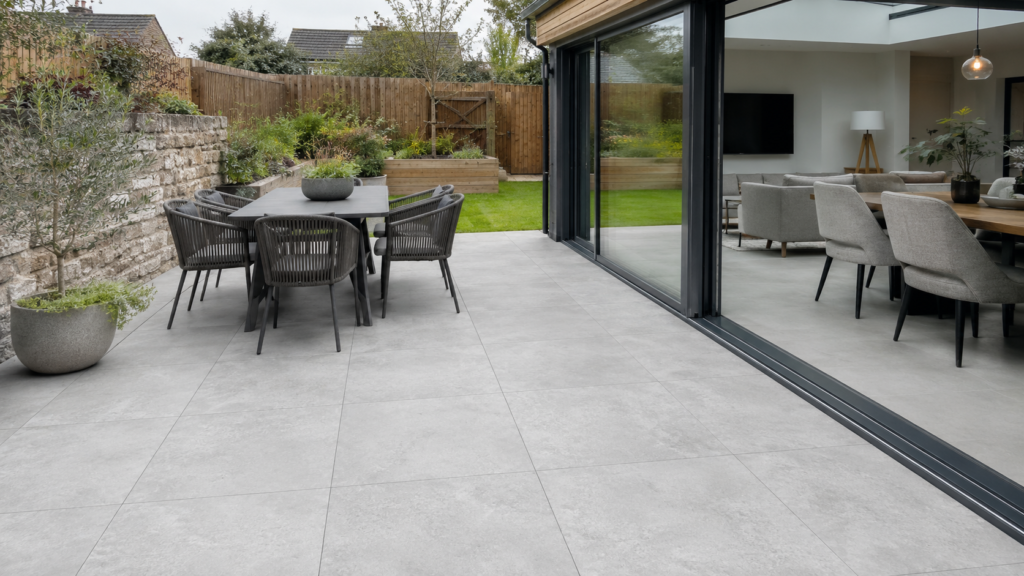
Choosing a porcelain or natural sandstone patio involves more than selecting a colour. Both materials can create an attractive outdoor living area. However, they differ in texture, maintenance, installation and visual character.
The right answer depends on the garden, property and household. A contemporary extension may suit precise porcelain slabs. Meanwhile, sandstone can sit naturally beside older stonework and informal planting.
Why choose porcelain paving?
Porcelain slabs provide consistent sizing, controlled colours and a refined finish. Manufacturers can reproduce stone, concrete and other textures across coordinated ranges. The material has low water absorption, which helps it resist many stains and weather effects.
This low absorption also changes the installation method. Installers normally use a suitable primer to create a reliable bond with the bedding mortar. Accurate cutting and careful joint alignment remain essential because the slab edges reveal small errors.
Porcelain may suit homeowners who want:
- A clean and contemporary appearance.
- Consistent slab thickness and dimensions.
- Lower routine absorption of spills.
- Coordinated indoor and outdoor styling.
- A broad choice of restrained colours.
Therefore, choose an exterior paving product with an appropriate textured surface. Smooth indoor tiles can become unsafe outdoors.
Why choose natural sandstone?
Sandstone provides natural variation across every slab. Changes in tone, veining and texture create warmth that manufactured consistency cannot fully copy. Riven surfaces often complement cottage gardens, rural homes and traditional walls.
However, natural stone can absorb moisture and staining more readily. It may need suitable cleaning and optional sealing, depending on the chosen product. The installer should also blend slabs from different packs to distribute colour variation.
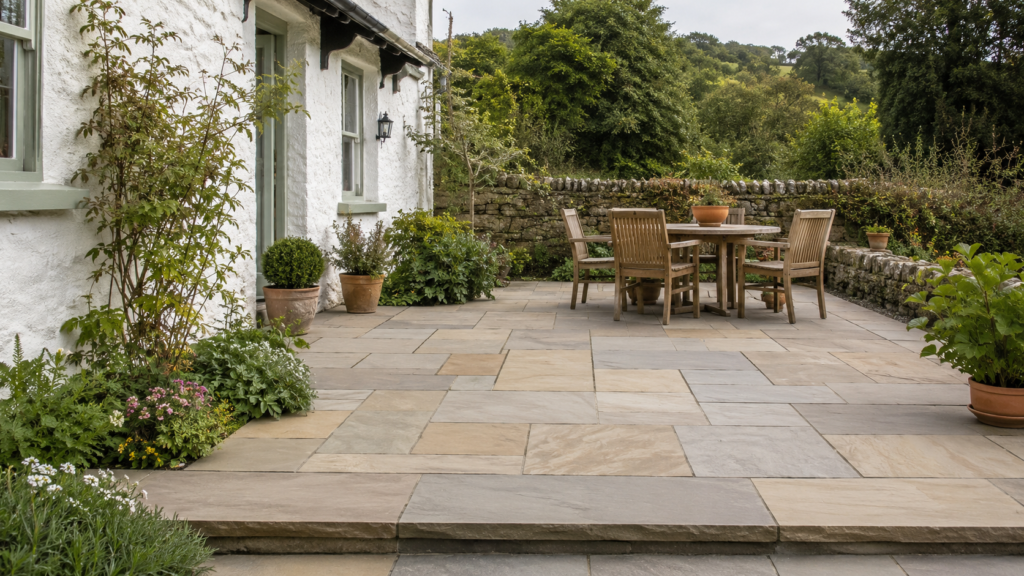
Compare installation and maintenance
Both materials need a stable sub-base, full mortar bed and planned drainage. Spot bedding can leave voids and weak support. Joints also need a system designed for the paving and site conditions.
Consider these practical questions:
- Will children or older relatives use the patio regularly?
- Does the garden receive shade, leaves or coastal exposure?
- Should the surface look uniform or naturally varied?
- How much cleaning and sealing feels acceptable?
- Do existing steps and thresholds limit slab thickness?
No paving remains completely maintenance-free. Regular sweeping and prompt spill removal protect either surface.
Plan a porcelain or natural sandstone patio
Vectorscape can show how porcelain and sandstone may work within your South Devon garden. The team will also consider levels, drainage, steps and adjoining landscaping. A complete design review helps the chosen material look right and perform reliably.