
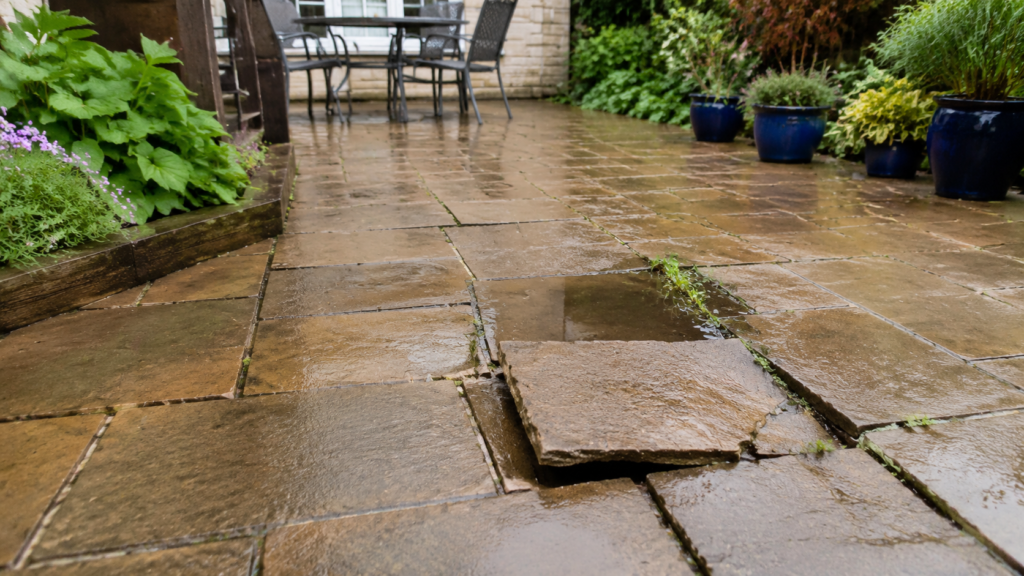
Deciding whether to repair or replace an old patio depends on the defect beneath the surface. One loose slab may need a focused repair. Widespread movement, poor drainage or an unsuitable layout can make replacement more sensible.
Start with a full inspection rather than the most visible crack. The patio edges, foundations and water route often explain why surface damage keeps returning.
When a local patio repair may work
Repair can provide good value when the surrounding construction remains stable. A contractor may lift and relay a small group of loose slabs. Damaged jointing can also be removed and replaced with a compatible system.
Local work may suit:
- One or two rocking slabs.
- Isolated settlement after a minor disturbance.
- Failed jointing across a limited area.
- A damaged edge beside a lawn or border.
- A blocked or broken drainage channel.
Matching old slabs can prove difficult after years of weathering. Even the same product may show a different tone. Discuss this visual difference before approving repairs.
Signs that replacement may offer better value
Repeated movement across the patio often points to weak preparation. If many slabs lack full support, repairing them one by one can become inefficient. Replacement allows the installer to rebuild the sub-base and bedding consistently.
Serious drainage problems can also justify reconstruction. The team can correct falls, install channels and adjust levels beside the house. Replacement may additionally improve narrow paths, awkward steps or unused corners.
Look for these wider warning signs:
- Puddles covering several areas after rain.
- Numerous cracked, loose or hollow-sounding slabs.
- Paving set too high beside walls or doors.
- Repeated weed growth through failed joints.
- Poor access between the home and garden.
- A layout that no longer suits the household.
Can existing materials be reused?
Some natural stone or quality paving can be cleaned and relaid. Reuse may preserve character and reduce waste. However, the process needs careful lifting, sorting and storage, which still involves labour.
A mixed approach can also work. Reclaimed slabs might form a secondary path, while new paving defines the main seating area. The design should make any material change feel deliberate.
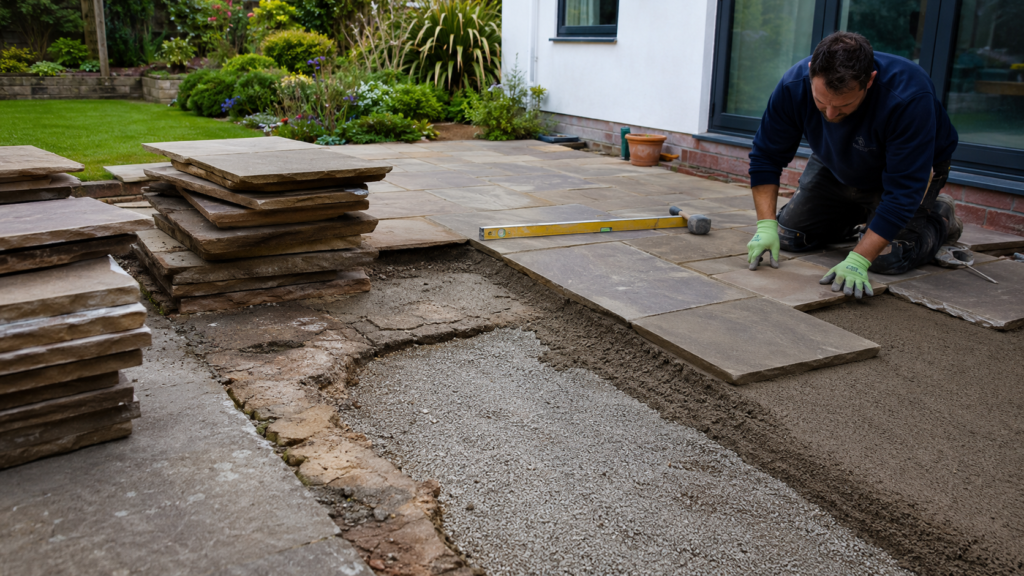
When to repair or replace an old patio
Think about dining, access, shade and garden maintenance before replacing the surface. Include enough space around doors and furniture. Also plan lighting, planting and drainage before laying the final slabs.
Vectorscape can inspect an old patio and explain repair, reuse or replacement options. Honest assessment helps direct the budget towards the work that solves the underlying problem.