
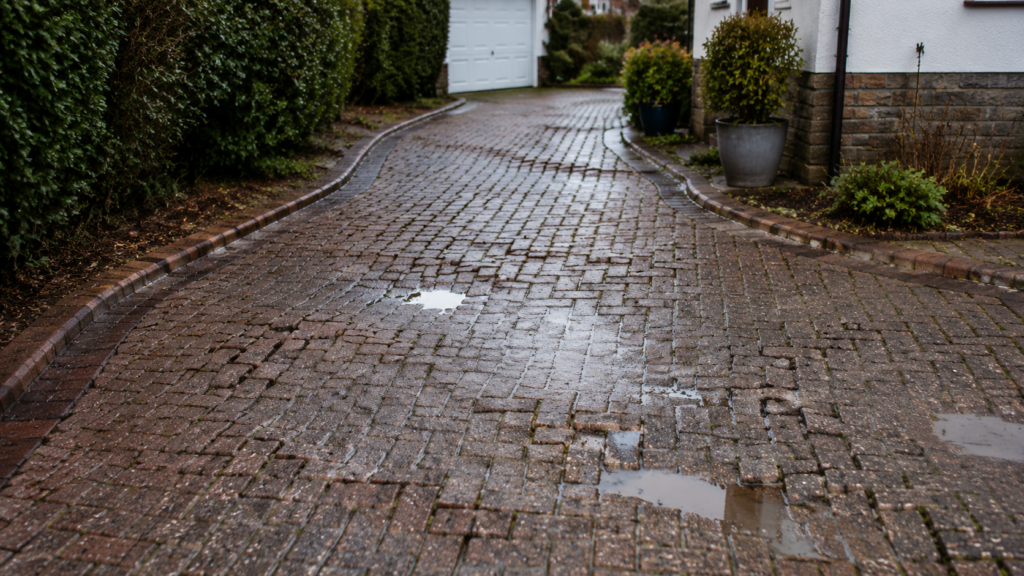
Uneven block paving can create puddles, trip points and an untidy driveway. The visible movement often starts below the blocks. Weak foundations, lost jointing material or failed edges allow the paved surface to change shape.
A local repair can solve some defects. However, widespread movement may indicate a larger construction or drainage problem. A careful inspection should identify the cause before anyone simply relays the surface.
Why do individual blocks sink?
Blocks commonly sink when the laying course or sub-base loses support. Poor compaction may leave voids that collapse under repeated vehicle loading. Water can also carry fine material away through damaged joints or drainage defects.
Leaks from water pipes, gullies or downpipes may soften the construction below. In addition, tree roots and disturbed utility trenches can create local movement. The repair must address these causes before reinstating the blocks.
Why does block paving spread sideways?
Edge restraints hold the paved area together. If an edge cracks, moves or lacks proper support, vehicle forces can push blocks towards the boundary. Joints then widen across the driveway, and the laying pattern loses its interlock.
Missing kiln-dried jointing sand can create a similar problem. Pressure transfers less effectively when joints remain empty. Regular inspection and appropriate re-sanding can support the surface, although it will not repair failed edges.
Why do tyre tracks and ruts appear?
Repeated traffic concentrates weight along the same routes. A driveway needs a foundation designed for its expected vehicles and ground conditions. Thin sub-base layers or soft ground may deform under that loading.
Common warning signs include:
- Puddles forming within wheel tracks.
- Widening joints near turning areas.
- Blocks rocking under foot.
- Loose edges beside lawns or borders.
- Depressions around drainage channels.
- Weeds returning quickly through open joints.
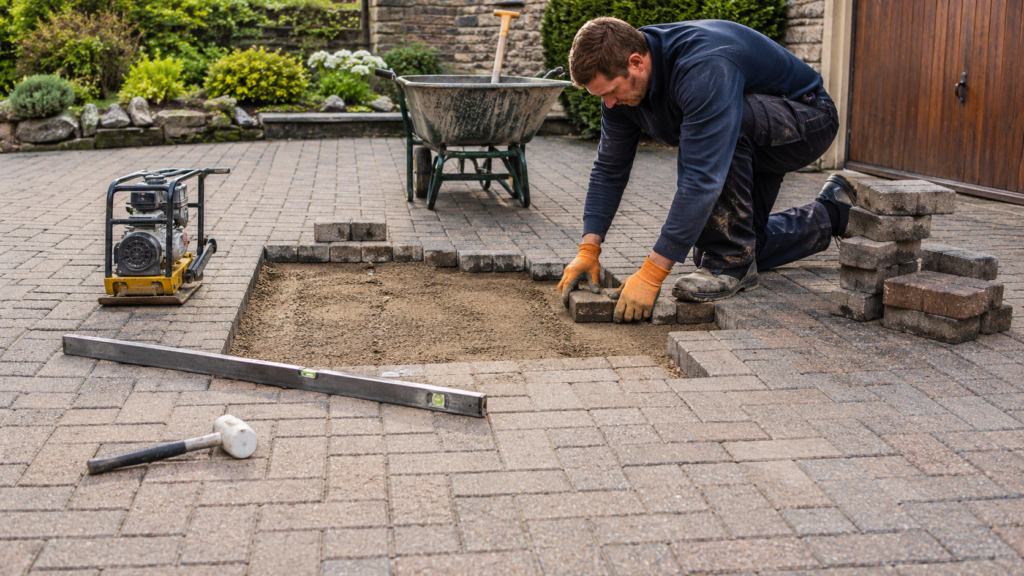
Can uneven block paving be repaired?
A focused repair may work when movement affects a small, stable area. The contractor can lift the blocks, rebuild the failed layers and relay the original surface. Matching replacement blocks may prove difficult when the paving has weathered for many years.
Complete reconstruction may offer better value when settlement covers a large area. It also allows the installer to correct drainage, edge restraints and sub-base depth together. Therefore, request both repair and replacement options when the extent remains unclear.
Protect the repaired surface
Keep drainage routes clear and replace lost jointing material when required. Avoid directing soil or muddy garden runoff across the paving. Also investigate new cracks, dips or rocking blocks before the affected area grows.
Vectorscape can assess uneven block paving across South Devon. The team can explain whether local reconstruction, drainage work or full replacement offers the soundest long-term result.