
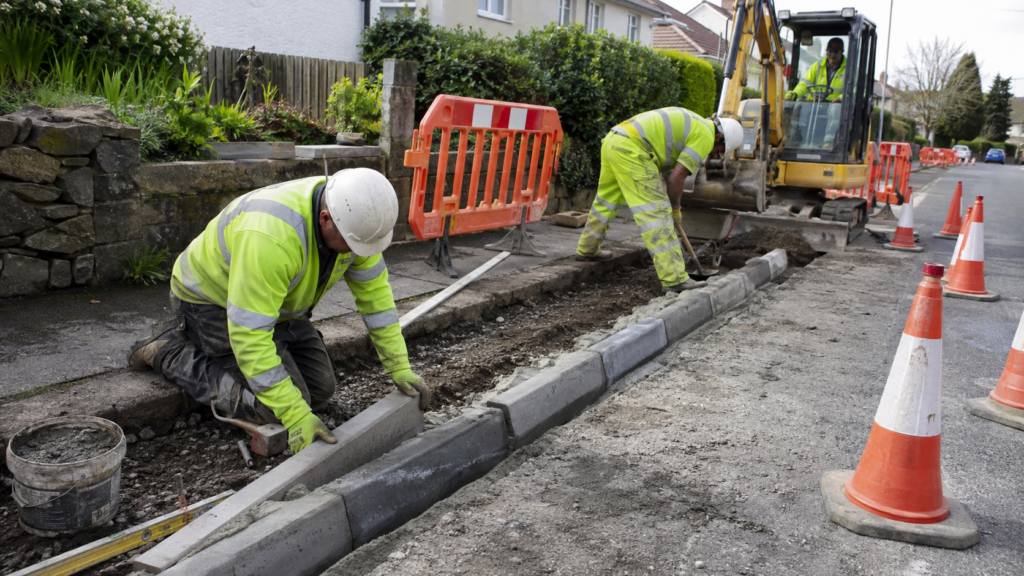
Dropped kerb construction changes part of the public footway into a reinforced vehicle crossing. It involves more than lowering the kerb beside the road. The finished area must carry vehicles while remaining safe for pedestrians and other highway users.
The contractor must follow the issued licence, approved details and relevant highway specification. Site conditions can change the sequence. However, most projects include safety controls, excavation, foundation work, kerb installation and surface reinstatement.
Dropped kerb construction and public safety
The team first checks the licence, location and proposed dimensions. They also confirm known underground services and inspect nearby covers, signs or street furniture. Suitable barriers, signs and pedestrian arrangements then protect the work zone.
Deliveries and waste removal need careful timing. A tidy site reduces obstruction and helps neighbours continue using the pavement safely. Therefore, good organisation matters as much as the physical construction.
Excavating the existing footway
The contractor removes the affected kerbs and excavates the crossing area. The required depth and materials depend on the council specification and existing footway. Any unsuitable ground must be addressed before new layers go down.
The team may uncover unexpected services or weak areas during excavation. These findings can affect timing or cost. They should never cover a serious defect merely to keep the original schedule.
Installing kerbs and a stronger foundation
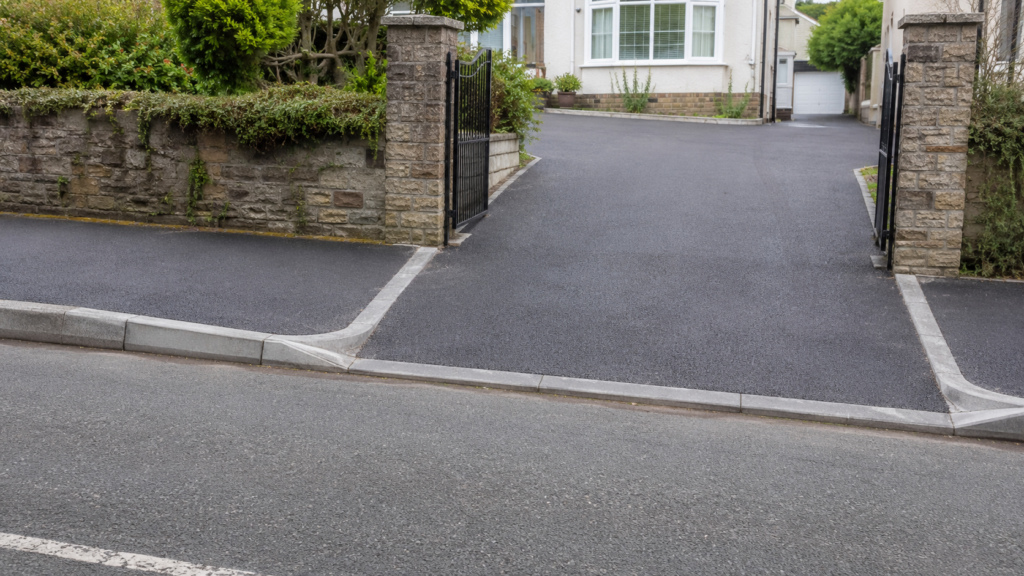
Dropped kerbs create the low central access. Transition kerbs connect that section with the standard kerb line at each side. Accurate alignment creates a neat result and a comfortable crossing point.
The vehicle-crossing foundation normally needs greater strength than an ordinary pedestrian footway. The contractor installs and compacts specified materials in controlled layers. Correct containment prevents edges from moving under repeated traffic.
Key quality checks include:
- Approved width and position.
- Stable kerb bedding and alignment.
- Correct levels across the pavement.
- Safe transitions for pedestrians.
- Suitable surface falls and drainage.
- Neat joints beside existing materials.
Reinstating the surface
The contractor completes the crossing with the approved tarmac, paving or other specified material. Detailed handwork closes gaps around kerbs, covers and boundaries. The team then cleans the highway and removes temporary controls when safe.
The council may inspect the crossing and require corrections if it does not meet the licence conditions. Maintenance responsibilities can also apply for a defined period. Keep all approvals and completion documents with the property records.
Vectorscape can combine approved dropped-kerb construction with the adjoining driveway entrance. This coordinated approach helps align levels, surfacing and drainage from the road to the private parking area.